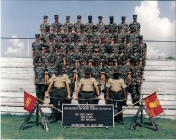

The Health Care Specialist is primarily responsible for providing emergency medical treatment, limited primary care and health protection and evacuation from a point of injury or illness.
68W1O - Skill Level One


Health Care Specialist: Administer emergency medical treatment to battlefield casualties, assists with outpatient care and treatment or assists with inpatient care and treatment under the supervision of a physician, nurse, physician’s assistant or a health care NCO.
Ambulance/ Aide Driver: Administers emergency medical treatment to battlefield casualties, and is the primary driver for actual or designated medical evacuation vehicles tracked or wheeled. This individual is responsible for the maintenance and accountability of assigned vehicle and assigned medical sets, kits, and outfits and is capable of operating all assigned equipment.
Emergency Care Specialist: Administers emergency medical treatment to battlefield casualties, and provides basic emergency medical technician skills in a non-combat scenario. The 10 skill level emergency care specialist will be able to perform all skills as noted by the National Registry of Emergency Medical Technicians. This soldier provides basic maintenance on all equipment sets, kits and outfits.
Litter Bearer: Administers emergency medical treatment to battlefield casualties, and is the primary person on all manual carries and evacuation of patients in a combat and peacetime operation.
Ambulance/ Aide Driver: Administers emergency medical treatment to battlefield casualties, and is the primary driver for actual or designated medical evacuation vehicles tracked or wheeled. This individual is responsible for the maintenance and accountability of assigned vehicle and assigned medical sets, kits, and outfits and is capable of operating all assigned equipment.
Emergency Care Specialist: Administers emergency medical treatment to battlefield casualties, and provides basic emergency medical technician skills in a non-combat scenario. The 10 skill level emergency care specialist will be able to perform all skills as noted by the National Registry of Emergency Medical Technicians. This soldier provides basic maintenance on all equipment sets, kits and outfits.
Litter Bearer: Administers emergency medical treatment to battlefield casualties, and is the primary person on all manual carries and evacuation of patients in a combat and peacetime operation.
68W2O - Skill Level Two

Health Care Sergeant: Administers emergency and routine medical treatment to battle and non-battle casualties, assists with outpatient care and treatment and supervises field and clinical medical facilities under the supervision of a physician, nurse or physician’s assistant.
Emergency Treatment Sergeant: Administers emergency and routine medical treatment to battle and non-battle casualties, assists with outpatient care and treatment and supervises field and clinical medical facilities under the supervision of a physician, nurse or physician’s assistant. The 20 skill level Emergency Treatment NCO will be able to perform and supervise all critical skills as noted by the National Registry of Emergency Medical Technicians. This NCO also supervises and is responsible for maintenance on all assigned equipment sets, kits and outfits.
Emergency Treatment Sergeant: Administers emergency and routine medical treatment to battle and non-battle casualties, assists with outpatient care and treatment and supervises field and clinical medical facilities under the supervision of a physician, nurse or physician’s assistant. The 20 skill level Emergency Treatment NCO will be able to perform and supervise all critical skills as noted by the National Registry of Emergency Medical Technicians. This NCO also supervises and is responsible for maintenance on all assigned equipment sets, kits and outfits.
68W3O - Skill Level Three

Health Care Sergeant: Supervise activities of field, clinical and mobile treatment facilities.
Air Ambulance Sergeant: Administers emergency medical treatment to battlefield casualties, and is trained in aeronautical medicine and all equipment associated with patient transport and rescue by rotary winged aircraft. The air ambulance Sergeant is also capable of performing pre, in flight, and post flight crew duties in accordance with local SOPs.
Emergency Care Sergeant: Supervises activities of 10 and 20 level medics in any field, clinical and mobile medical treatment facilities. The 30 skill level Emergency Care NCO will be able supervise and train all critical skills as noted by the National Registry of Emergency Medical Technicians. This NCO also supervises and is responsible for maintenance and accountability of all assigned equipment sets, kits and outfits.
Section Sergeant: Supervises activities of field, clinical and mobile treatment facilities. Responsible for at least one section of a medical facility. Serves as the subject matter expert for their individual section and how their section functions as part of the unit.
Air Ambulance Sergeant: Administers emergency medical treatment to battlefield casualties, and is trained in aeronautical medicine and all equipment associated with patient transport and rescue by rotary winged aircraft. The air ambulance Sergeant is also capable of performing pre, in flight, and post flight crew duties in accordance with local SOPs.
Emergency Care Sergeant: Supervises activities of 10 and 20 level medics in any field, clinical and mobile medical treatment facilities. The 30 skill level Emergency Care NCO will be able supervise and train all critical skills as noted by the National Registry of Emergency Medical Technicians. This NCO also supervises and is responsible for maintenance and accountability of all assigned equipment sets, kits and outfits.
Section Sergeant: Supervises activities of field, clinical and mobile treatment facilities. Responsible for at least one section of a medical facility. Serves as the subject matter expert for their individual section and how their section functions as part of the unit.
68W4O - Skill Level Four

Health Care NCO: Supervise para-professional medical service activities in large fixed and mobile treatment facilities.
Career Advisor: Responsible for the career management, professional management and world-wide assignment of Soldiers within 68 CMF. Recommends career enhancing assignments, training, and NCOES development. Provides input for promotion projections, force alignments, and MOS structure issues. Provides information and guidance to Soldiers telephonically, by personal interview, and by written correspondence. Fills all requirements for Nominative and Special Assignments.
Clinical NCO: Supervises activities of field, clinical and mobile treatment facilities more often is associated with a specific clinic such as family care, dermatology etc.. The clinical NCO is more than likely found in a TDA assignment or a CSH or MSB facility.
Detachment Sergeant: The Detachment Sergeant is accountable to the Detachment Commander and performs duties similar to a 1SG. He/She is responsible for providing sound advice to the commander on a wide range of topics including the health, esprit de corps, discipline, mentoring, well being, career progression, recognition, and professional development of all assigned enlisted members. Furthermore, working with his or her fellow NCOs and supervisors, the detachment sergeant ensures discipline is equitably maintained, and the goals of health, esprit de corps, discipline, mentoring, and welfare of the enlisted force are met. Detachment sergeants must be proactive in the performance of his or her duties; demonstration of initiative, innovation, and strength of character are imperatives in this vocation.
Emergency Care NCO: Supervises activities of 10, 20 and 30 level medics in any field, clinical and mobile medical treatment facilities. The 40 skill level Emergency Care NCO will be able supervise and train all critical skills as noted by the National Registry of Emergency Medical Technicians. This NCO supervises and is responsible for maintenance and accountability of all assigned equipment sets, kits and outfits.
Intelligence Sergeant: The Intelligence Sergeant is responsible for the intelligence, security, operations, and training necessary to support the battalion / brigade critical wartime mission. The IntelPlatoon Sergeantligence Sergeant plans and supervises the security of the battalion / brigade area. The Intelligence Sergeant is responsible for the production of intelligence, and counterintelligence and intelligence training and security. It is responsible for communications, communications security, and relaying, on request, local weather observations. This section also directs activities pertaining to organization, operations, training, and deployment readiness for subordinate units.
Operations Sergeant: The Operations Sergeant assists in organizing, and coordinating the company/battalion/brigade and supporting unit’s operations. He is the noncommissioned officer in charge (NCOIC) of the operations in the absence of the Executive/Operations Officer. The Operations Sergeant advises the Company/Battalion/Brigade Commander on the current and future employment of the unit. He maintains the current operational status of the unit. He organizes, deploys and supervises the field Tactical Operations Center (TOC).
Plans NCO: The medical plans and operations NCO duties and responsibilities encompass, but are not limited too; aiding in the development of combat health support plans and annexes for multi-echelon missions, provides oversight on all medical missions within the unit of assignment, anticipates requirements and allocates resources sufficient to provide appropriate Combat Health Support from point of injury to CONUS sustaining base; assists in the preparation, coordination, authentication, publishing and distribution of Command SOPs and OPLANs; assists in the review of OPLANs for synchronization and Completeness. In short, the medical plans/operations NCO is a medical multifunctional logistician able to advise and provide assistance on all enlisted aspects of combat health support in either the TDA or TOE environment.
Platoon Sergeant: The Platoon Sergeant is the primary assistant and advisor to the platoon leader, with the responsibility of training and caring for soldiers. The platoon sergeant helps the commander to train the platoon leader and in that regard has an enormous effect on how that young officer perceives NCOs for the rest of his career. The platoon sergeant takes charge of the platoon in the absence of the platoon leader. As the lowest level senior NCO involved in the company METL, platoon sergeants teach collective and individual tasks to soldiers in their squads, crews or equivalent small units.
Career Advisor: Responsible for the career management, professional management and world-wide assignment of Soldiers within 68 CMF. Recommends career enhancing assignments, training, and NCOES development. Provides input for promotion projections, force alignments, and MOS structure issues. Provides information and guidance to Soldiers telephonically, by personal interview, and by written correspondence. Fills all requirements for Nominative and Special Assignments.
Clinical NCO: Supervises activities of field, clinical and mobile treatment facilities more often is associated with a specific clinic such as family care, dermatology etc.. The clinical NCO is more than likely found in a TDA assignment or a CSH or MSB facility.
Detachment Sergeant: The Detachment Sergeant is accountable to the Detachment Commander and performs duties similar to a 1SG. He/She is responsible for providing sound advice to the commander on a wide range of topics including the health, esprit de corps, discipline, mentoring, well being, career progression, recognition, and professional development of all assigned enlisted members. Furthermore, working with his or her fellow NCOs and supervisors, the detachment sergeant ensures discipline is equitably maintained, and the goals of health, esprit de corps, discipline, mentoring, and welfare of the enlisted force are met. Detachment sergeants must be proactive in the performance of his or her duties; demonstration of initiative, innovation, and strength of character are imperatives in this vocation.
Emergency Care NCO: Supervises activities of 10, 20 and 30 level medics in any field, clinical and mobile medical treatment facilities. The 40 skill level Emergency Care NCO will be able supervise and train all critical skills as noted by the National Registry of Emergency Medical Technicians. This NCO supervises and is responsible for maintenance and accountability of all assigned equipment sets, kits and outfits.
Intelligence Sergeant: The Intelligence Sergeant is responsible for the intelligence, security, operations, and training necessary to support the battalion / brigade critical wartime mission. The IntelPlatoon Sergeantligence Sergeant plans and supervises the security of the battalion / brigade area. The Intelligence Sergeant is responsible for the production of intelligence, and counterintelligence and intelligence training and security. It is responsible for communications, communications security, and relaying, on request, local weather observations. This section also directs activities pertaining to organization, operations, training, and deployment readiness for subordinate units.
Operations Sergeant: The Operations Sergeant assists in organizing, and coordinating the company/battalion/brigade and supporting unit’s operations. He is the noncommissioned officer in charge (NCOIC) of the operations in the absence of the Executive/Operations Officer. The Operations Sergeant advises the Company/Battalion/Brigade Commander on the current and future employment of the unit. He maintains the current operational status of the unit. He organizes, deploys and supervises the field Tactical Operations Center (TOC).
Plans NCO: The medical plans and operations NCO duties and responsibilities encompass, but are not limited too; aiding in the development of combat health support plans and annexes for multi-echelon missions, provides oversight on all medical missions within the unit of assignment, anticipates requirements and allocates resources sufficient to provide appropriate Combat Health Support from point of injury to CONUS sustaining base; assists in the preparation, coordination, authentication, publishing and distribution of Command SOPs and OPLANs; assists in the review of OPLANs for synchronization and Completeness. In short, the medical plans/operations NCO is a medical multifunctional logistician able to advise and provide assistance on all enlisted aspects of combat health support in either the TDA or TOE environment.
Platoon Sergeant: The Platoon Sergeant is the primary assistant and advisor to the platoon leader, with the responsibility of training and caring for soldiers. The platoon sergeant helps the commander to train the platoon leader and in that regard has an enormous effect on how that young officer perceives NCOs for the rest of his career. The platoon sergeant takes charge of the platoon in the absence of the platoon leader. As the lowest level senior NCO involved in the company METL, platoon sergeants teach collective and individual tasks to soldiers in their squads, crews or equivalent small units.
68W5O - Skill Level Five

Senior Health Care NCO: Supervises and provides technical guidance within the Army Medical Department and Army Special Staff Activities.
Intelligence Sergeant: The Intelligence Sergeant is responsible for the intelligence, security, operations, and training necessary to support the battalion / brigade critical wartime mission. The Intelligence Sergeant plans and supervises the security of the battalion / brigade area. The Intelligence Sergeant is responsible for the production of intelligence, and counterintelligence and intelligence training and security. It is responsible for communications, communications security, and relaying, on request, local weather observations. This section also directs activities pertaining to organization, operations, training, and deployment readiness for subordinate units.
Plans NCO: The medical plans and operations NCO duties and responsibilities encompass, but are not limited too; supervision of all enlisted personnel assigned to the medical plans and operations cell, aiding in the development of combat health support plans and annexes for multi-echelon missions, provides oversight on all medical missions within the unit of assignment, anticipates requirements and allocates resources sufficient to provide appropriate Combat Health Support from point of injury to CONUS sustaining base; assists in the preparation, coordination, authentication, publishing and distribution of Command SOPs and OPLANs; assists in the review of OPLANs for synchronization and Completeness. In short, the medical plans/operations NCO is a medical multifunctional logistician that advises the operations cell chief and provides assistance on all enlisted aspects of combat health support in either the TDA or TOE environment.
Operations Sergeant: The Operations Sergeant assists in organizing, and coordinating the company/battalion/brigade and supporting unit’s operations. He is the noncommissioned officer in charge (NCOIC) of the operations in the absence of the Executive/Operations Officer. The Operations Sergeant advises the Company/Battalion/Brigade Commander on the current and future employment of the unit. He maintains the current operational status of the unit. He organizes, deploys and supervises the field Tactical Operations Center (TOC).
First Sergeant: The First Sergeant is the senior NCO in companies, batteries and troops. The position of first sergeant is similar to that of the CSM in importance, responsibility and prestige. As far back as the Revolutionary War period, first sergeants have enforced discipline, fostered loyalty and commitment in their soldiers, maintained duty rosters and made morning reports to their company commanders. Since today’s first sergeants maintain daily contact with and are responsible for training and ensuring the health and welfare of all of the unit’s soldiers and families, this position requires extraordinary leadership and professional competence. First sergeants hold formations, instruct platoon sergeants and assist the commander in daily unit operations. Though first sergeants supervise routine administrative duties their principle duty is training soldiers. The CSM, first sergeant and other key NCOs, must understand the organization’s collective mission essential tasks during METL-based training. Through NCO development programs, performance counseling and other guidance, first sergeants are the Army’s most important mentors in developing subordinate NCOs.
Intelligence Sergeant: The Intelligence Sergeant is responsible for the intelligence, security, operations, and training necessary to support the battalion / brigade critical wartime mission. The Intelligence Sergeant plans and supervises the security of the battalion / brigade area. The Intelligence Sergeant is responsible for the production of intelligence, and counterintelligence and intelligence training and security. It is responsible for communications, communications security, and relaying, on request, local weather observations. This section also directs activities pertaining to organization, operations, training, and deployment readiness for subordinate units.
Plans NCO: The medical plans and operations NCO duties and responsibilities encompass, but are not limited too; supervision of all enlisted personnel assigned to the medical plans and operations cell, aiding in the development of combat health support plans and annexes for multi-echelon missions, provides oversight on all medical missions within the unit of assignment, anticipates requirements and allocates resources sufficient to provide appropriate Combat Health Support from point of injury to CONUS sustaining base; assists in the preparation, coordination, authentication, publishing and distribution of Command SOPs and OPLANs; assists in the review of OPLANs for synchronization and Completeness. In short, the medical plans/operations NCO is a medical multifunctional logistician that advises the operations cell chief and provides assistance on all enlisted aspects of combat health support in either the TDA or TOE environment.
Operations Sergeant: The Operations Sergeant assists in organizing, and coordinating the company/battalion/brigade and supporting unit’s operations. He is the noncommissioned officer in charge (NCOIC) of the operations in the absence of the Executive/Operations Officer. The Operations Sergeant advises the Company/Battalion/Brigade Commander on the current and future employment of the unit. He maintains the current operational status of the unit. He organizes, deploys and supervises the field Tactical Operations Center (TOC).
First Sergeant: The First Sergeant is the senior NCO in companies, batteries and troops. The position of first sergeant is similar to that of the CSM in importance, responsibility and prestige. As far back as the Revolutionary War period, first sergeants have enforced discipline, fostered loyalty and commitment in their soldiers, maintained duty rosters and made morning reports to their company commanders. Since today’s first sergeants maintain daily contact with and are responsible for training and ensuring the health and welfare of all of the unit’s soldiers and families, this position requires extraordinary leadership and professional competence. First sergeants hold formations, instruct platoon sergeants and assist the commander in daily unit operations. Though first sergeants supervise routine administrative duties their principle duty is training soldiers. The CSM, first sergeant and other key NCOs, must understand the organization’s collective mission essential tasks during METL-based training. Through NCO development programs, performance counseling and other guidance, first sergeants are the Army’s most important mentors in developing subordinate NCOs.
School Information
School: 081 School Location: FT SAM HOUSTON, TX
Course: 300-68W10 Phase:
Course Title: HEALTH CARE SPECIALIST
300-68W10 Phase: Course Length: 16 Weeks 0.0 Days
Verifiable Prerequisites
PULHES 111121 Required
Must meet height weight std IAW AR 600-9 YES Required
Physical Demand Rating MODERATELY HEAVY - LIFT OCCASIONAL 80 LB, FREQUENT 40 LB Required
Prerequisite Courses
There are no Prerequisite Courses.
Text Prerequisites
Open to Active Army CPL/SPC non-promotable and below. Army Reserve and Army National Guard soldiers may attend if they are a Sergeant or below. RC Soldiers SGT(P) and above must request a waiver from APPD to attend this course. Soldiers holding MOS 68A, 68K, 68P, or 68V will not be considered. A minimum score of 105 in aptitude area ST, minimum GT of 110 in Armed Services Vocational aptitude Battery (ASVAB) tests administered prior to January 2002 and a minimum score of 102 in aptitude area ST, minimum GT of 110 on (ASVAB) tests administered on or after 2 January 2002 is required. ASVAB Test administered on or after 01 July 2004, will have an ST requirement of 101 and a GT of 107. The service-remaining requirement (SRR) for in-service AA soldiers upon completion of this course is 14 months, IAW AR 614-200, Chapter 4, Table 4-1. The SRR reqirement for National Guard and Army Reserve refer to Career Counselor or Retention NCO for the latest SRR. Soldiers who do not meet the TIS remaining requirements must extend or re-enlist prior to departing their duty station. Applicants may substitute a GED equivalency for a High School Diploma. Enlisted women who are pregnant will be processed IAW AR 635-200. Applicants who have an aversion to blood or body fluids are encouraged not to apply. Soldiers must have no history of a felony conviction, no history of conviction of crimes involving an out of hospital patient or a patient or resident of a medical care facility, financial exploitation of a person entrusted to the care of the applicant, any weapons/ammunition/explosives/arson charges, any drug activity involving illegal possession, buying, selling, or distribution (dealing) of controlled substances or synthetics, violence against person or property and no sexual misconduct. The physical
profile serials (PULHES) applies to initial entry soldiers only and is not be used as a prerequisite for soldiers reclassifying into this MOS.
Course Scope:
To prepare enlisted personnel to become soldier medics and provide emergency medical treatment, limited primary care, force health protection and evacuation in a variety of operational and clinical settings from point of injury or illness through the continuum of military health care. The trainee receives specific training in combat and military operations other-than-war casualty care, medical care for patients exposed to weapons of mass destruction, deployable medical systems, aircraft and ground evacuation, and casualty triage and processing. The course trains the requirements of the National Registry of Emergency Medical Technicians - Basic (EMT-B) as a foundation for the Health Care Specialist. Upon successful completion of this course soldiers will be National Registry certified as an EMT-B and upon successful completion of the course, graduates are awarded the 68W MOS.
Special Information:
Reserve Component soldiers will arrive at Fort Sam Houston with the following items MPRJ 201 file, Medical Record, Dental Record and complete basic clothing issue, to include running shoes. Applicants requiring a waiver for any of the prerequisites
must submit a DA Form 4187 requesting a waiver(s) along with a copy of their Form 2-1 and ERB to the CDR, AMEDD Center & School, AMEDD Personnel Proponent Directorate, ATTN: MCCS-DE, 2427 Hood St., Fort Sam Houston, Texas 78234-7584.
Course: 300-68W10 Phase:
Course Title: HEALTH CARE SPECIALIST
300-68W10 Phase: Course Length: 16 Weeks 0.0 Days
Verifiable Prerequisites
PULHES 111121 Required
Must meet height weight std IAW AR 600-9 YES Required
Physical Demand Rating MODERATELY HEAVY - LIFT OCCASIONAL 80 LB, FREQUENT 40 LB Required
Prerequisite Courses
There are no Prerequisite Courses.
Text Prerequisites
Open to Active Army CPL/SPC non-promotable and below. Army Reserve and Army National Guard soldiers may attend if they are a Sergeant or below. RC Soldiers SGT(P) and above must request a waiver from APPD to attend this course. Soldiers holding MOS 68A, 68K, 68P, or 68V will not be considered. A minimum score of 105 in aptitude area ST, minimum GT of 110 in Armed Services Vocational aptitude Battery (ASVAB) tests administered prior to January 2002 and a minimum score of 102 in aptitude area ST, minimum GT of 110 on (ASVAB) tests administered on or after 2 January 2002 is required. ASVAB Test administered on or after 01 July 2004, will have an ST requirement of 101 and a GT of 107. The service-remaining requirement (SRR) for in-service AA soldiers upon completion of this course is 14 months, IAW AR 614-200, Chapter 4, Table 4-1. The SRR reqirement for National Guard and Army Reserve refer to Career Counselor or Retention NCO for the latest SRR. Soldiers who do not meet the TIS remaining requirements must extend or re-enlist prior to departing their duty station. Applicants may substitute a GED equivalency for a High School Diploma. Enlisted women who are pregnant will be processed IAW AR 635-200. Applicants who have an aversion to blood or body fluids are encouraged not to apply. Soldiers must have no history of a felony conviction, no history of conviction of crimes involving an out of hospital patient or a patient or resident of a medical care facility, financial exploitation of a person entrusted to the care of the applicant, any weapons/ammunition/explosives/arson charges, any drug activity involving illegal possession, buying, selling, or distribution (dealing) of controlled substances or synthetics, violence against person or property and no sexual misconduct. The physical
profile serials (PULHES) applies to initial entry soldiers only and is not be used as a prerequisite for soldiers reclassifying into this MOS.
Course Scope:
To prepare enlisted personnel to become soldier medics and provide emergency medical treatment, limited primary care, force health protection and evacuation in a variety of operational and clinical settings from point of injury or illness through the continuum of military health care. The trainee receives specific training in combat and military operations other-than-war casualty care, medical care for patients exposed to weapons of mass destruction, deployable medical systems, aircraft and ground evacuation, and casualty triage and processing. The course trains the requirements of the National Registry of Emergency Medical Technicians - Basic (EMT-B) as a foundation for the Health Care Specialist. Upon successful completion of this course soldiers will be National Registry certified as an EMT-B and upon successful completion of the course, graduates are awarded the 68W MOS.
Special Information:
Reserve Component soldiers will arrive at Fort Sam Houston with the following items MPRJ 201 file, Medical Record, Dental Record and complete basic clothing issue, to include running shoes. Applicants requiring a waiver for any of the prerequisites
must submit a DA Form 4187 requesting a waiver(s) along with a copy of their Form 2-1 and ERB to the CDR, AMEDD Center & School, AMEDD Personnel Proponent Directorate, ATTN: MCCS-DE, 2427 Hood St., Fort Sam Houston, Texas 78234-7584.